Transforming complex concepts into learner-centered content — where visual design meets instructional strategy to make hard ideas accessible.
Instructional design is the practice of making complex ideas learnable. It sits at the intersection of visual design, communication strategy, and cognitive science — and it asks the same fundamental question that drives all my work: what does this actually need to communicate, and to whom?
This project — built in Articulate 360 — took abstract, multi-layered content and restructured it into a sequence that a learner could follow, absorb, and apply. The challenge was not simplification. It was clarity without loss.
Good instructional design, like good visual design, is invisible when it works. The learner doesn't notice the structure — they just feel like they understand.
The process followed a learner-first sequence — beginning with audience analysis and working outward to structure, then content, then delivery. Every decision traced back to one question: what does the learner need at this moment?
The experience map connects professional background to learning design patterns — showing how different domains of expertise inform instructional decisions.
The board maps the relationship between lived experience, design skills, and instructional theory — demonstrating that good learning design draws from every discipline, not just education.
It was also a personal exercise: making the invisible logic of my own development visible, as a designed artefact.
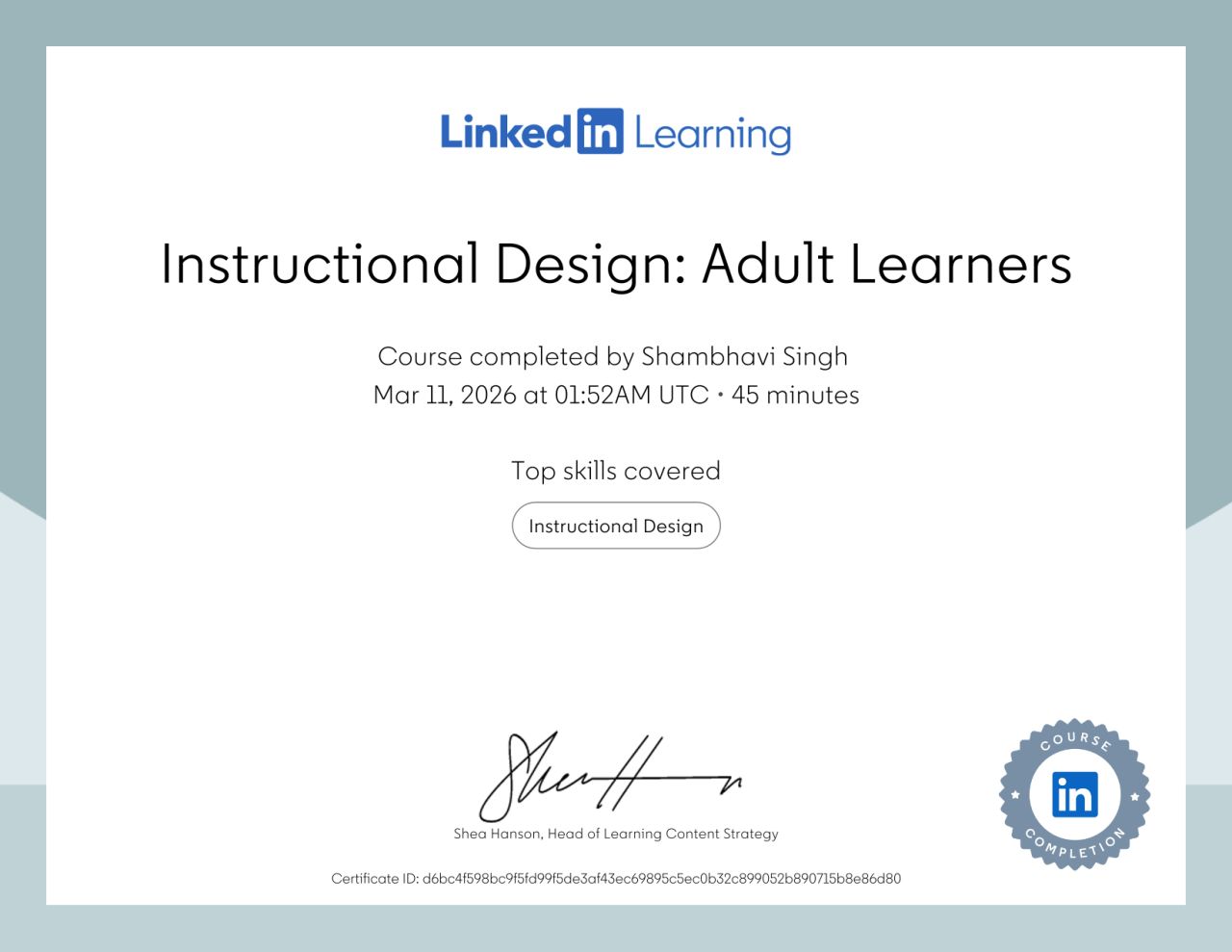
Two LinkedIn Learning certificates completed March 2026 — formalising the theoretical foundations behind the Articulate project.